
The Hidden Dangers of a Missing Tooth
A missing tooth is not just an empty space in your smile. It's a problem that affects your entire oral health system. Even if the missing tooth doesn't hurt or isn't visible, leaving it untreated can lead to serious consequences over time.
6 Problems Caused by a Missing Tooth
1. Teeth Start Moving Into the Empty Space
Teeth like to stay close to each other. When one tooth is missing, the nearby teeth slowly tilt or shift into the gap. This movement may not be noticeable at first, but over time it changes the alignment of your teeth, creating spacing issues and bite problems.
2. The Opposite Tooth Starts Growing Longer
Every tooth needs an opposing tooth to bite against. When a tooth is missing, the tooth in the opposite jaw has nothing to stop it, so it starts coming out more than normal. This makes the tooth weak, unstable, and more susceptible to fractures and sensitivity.
3. Chewing Becomes Difficult and Uneven
As teeth shift and move, your bite becomes uneven. This can make chewing uncomfortable and puts extra pressure on other teeth, which can lead to tooth wear, cracks, or pain in the jaw joints (TMJ).
4. Food Gets Stuck More Easily
Gaps and tilted teeth trap food. This makes cleaning difficult and increases the risk of cavities, gum problems, and bad breath. The trapped food particles create a breeding ground for bacteria that can damage surrounding teeth.
5. Jawbone Becomes Weak Over Time
When you chew, your teeth send pressure to the jawbone, keeping it strong. If a tooth is missing, that pressure is lost, and the jawbone slowly shrinks in that area. Over time, this can affect facial shape and make future treatment more difficult.
6. Delaying Replacement Makes Treatment Harder
The longer a tooth is missing:
- Teeth move more
- Bone reduces more
- Treatment becomes more complex and costly
Early replacement is always simpler, more predictable, and more successful than delayed treatment.
A Simple Example
Think of your teeth like books on a shelf. If one book is removed and not replaced, the other books slowly lean and lose alignment. The same happens with your teeth when one is missing.
Insight from Dr. Mrunal Burute
"Many patients come to me thinking that a missing back tooth doesn't need replacement because it's not visible. But by the time they experience problems, the damage has already started. Teeth have shifted, bone has shrunk, and now the treatment is more complex."
At Burute Dental, we believe in preventive care. Replacing a missing tooth early not only restores your smile but also protects your overall oral health. Dental implants are the closest replacement to natural teeth, providing stability and preventing bone loss.
In Summary
A missing tooth is not just a space. It can affect:
Other Teeth
Causes shifting and misalignment
Your Bite
Creates uneven chewing patterns
Gums
Increases risk of gum disease
Jawbone
Leads to bone loss and facial changes
The Solution: Timely Replacement
Replacing a missing tooth helps maintain a healthy, balanced smile and prevents bigger problems in the future. Whether through dental implants, bridges, or other solutions, timely treatment preserves your oral health and saves you from more complex procedures later.
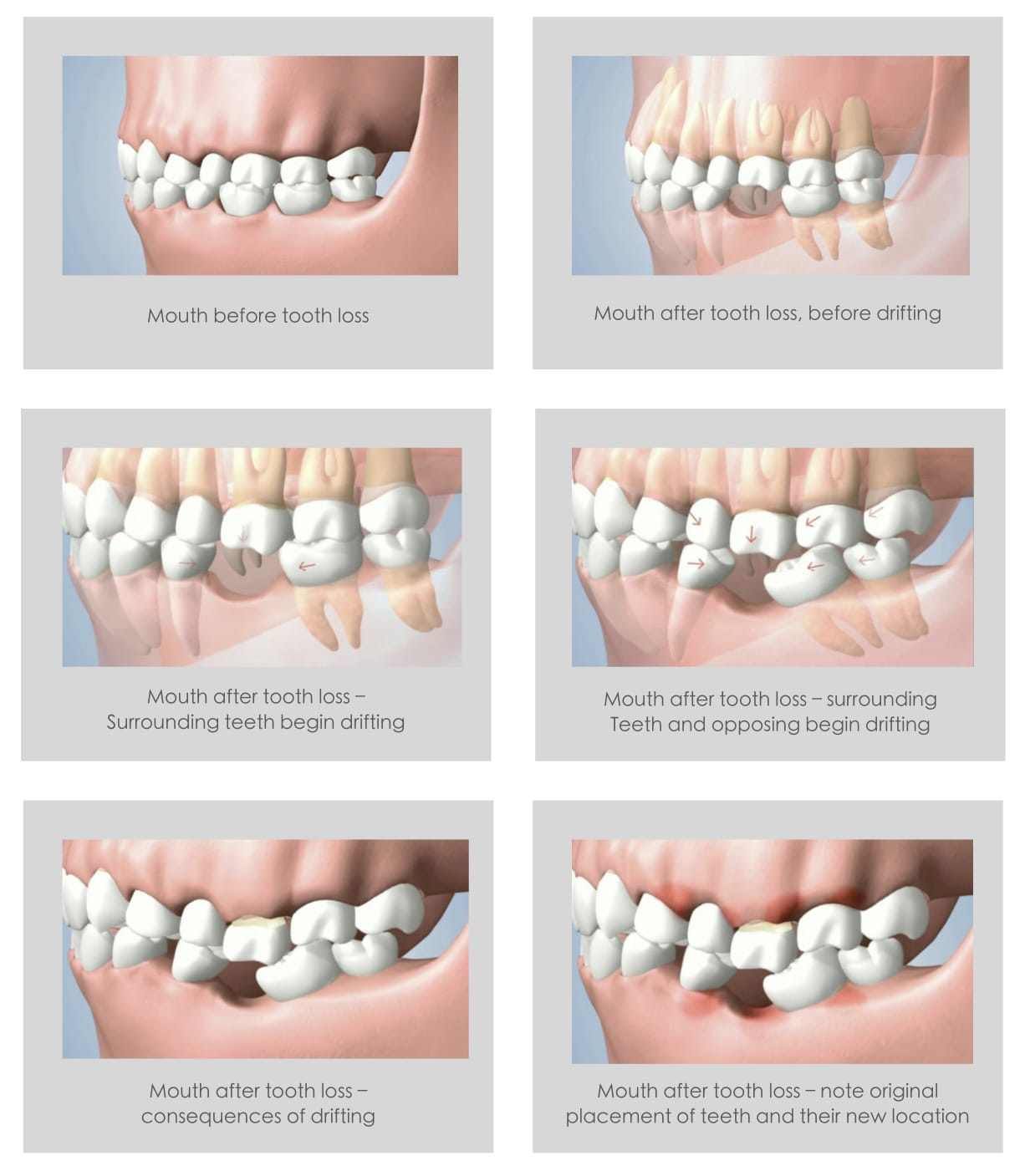
Problems Caused by Missing Tooth